

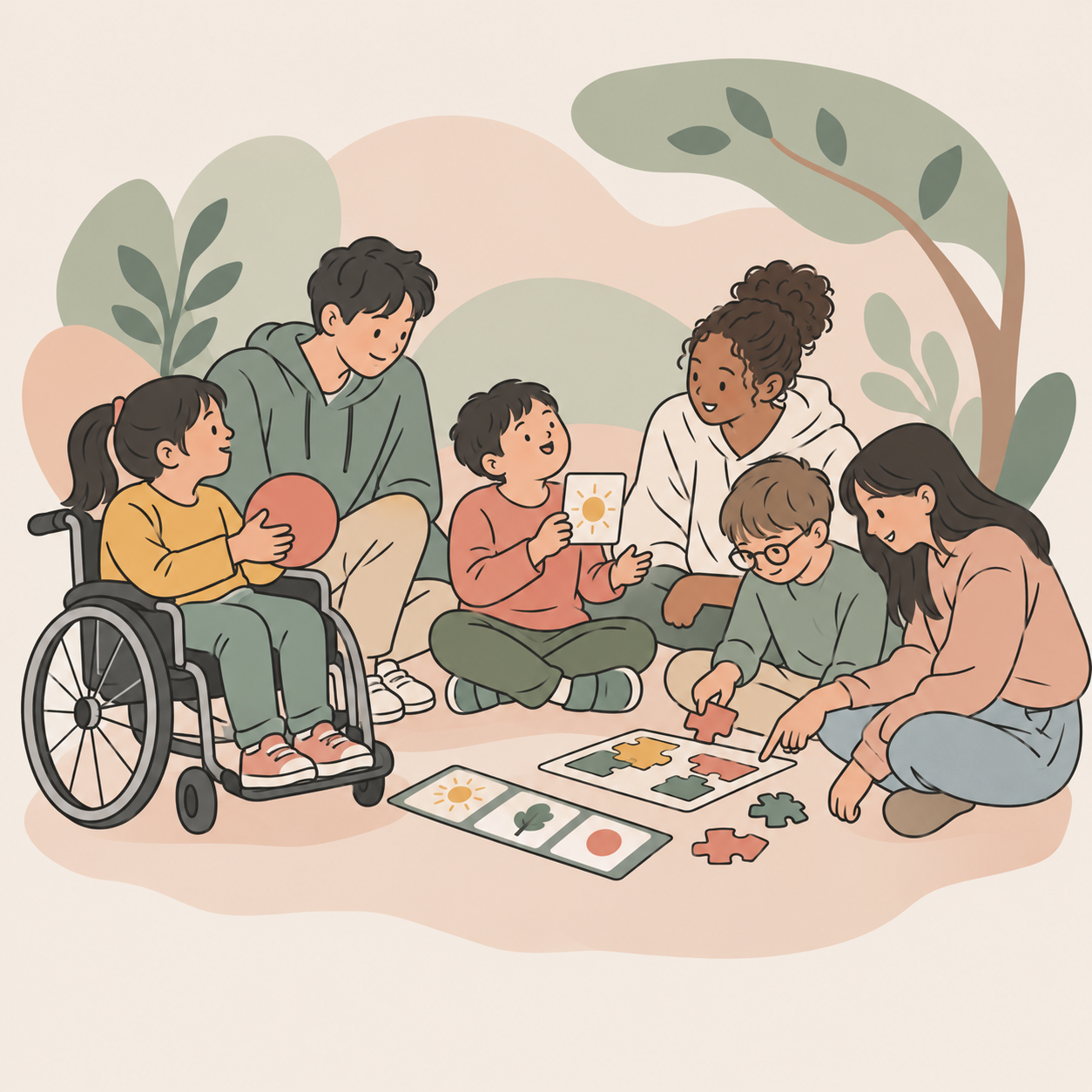
Supporting a child does not mean making every decision for them.
This week, we explored how structured choices can promote independence and prevent learned helplessness. We practiced using two clear options to make decision-making easier and less overwhelming.
All ten volunteers attended our thirteenth session, which focused on autonomy and decision-making. We discussed how well-intentioned adults and mentors may sometimes provide too much assistance, limiting a child’s opportunities to make choices independently.
Ella, a ninth-grade volunteer, observed that broad questions such as “What do you want to do?” may create choice overload. When there are too many possibilities, a child may struggle to respond or become anxious.
A simple choice can be a powerful step toward independence.
To make choices more manageable, Ethan practiced presenting two physical objects at the child’s eye level. This method combines simple language with a clear visual cue, allowing the child to compare the available options directly.
In our role-play, a buddy stood frozen during free-play time and did not select an activity. Alex held a puzzle in his left hand and a toy car in his right hand and asked, “Puzzle or car?” The buddy was then able to indicate a preference without being pressured.
This activity showed us that autonomy grows through small, meaningful opportunities. When we offer clear and manageable choices, we communicate that the child’s preferences matter.