

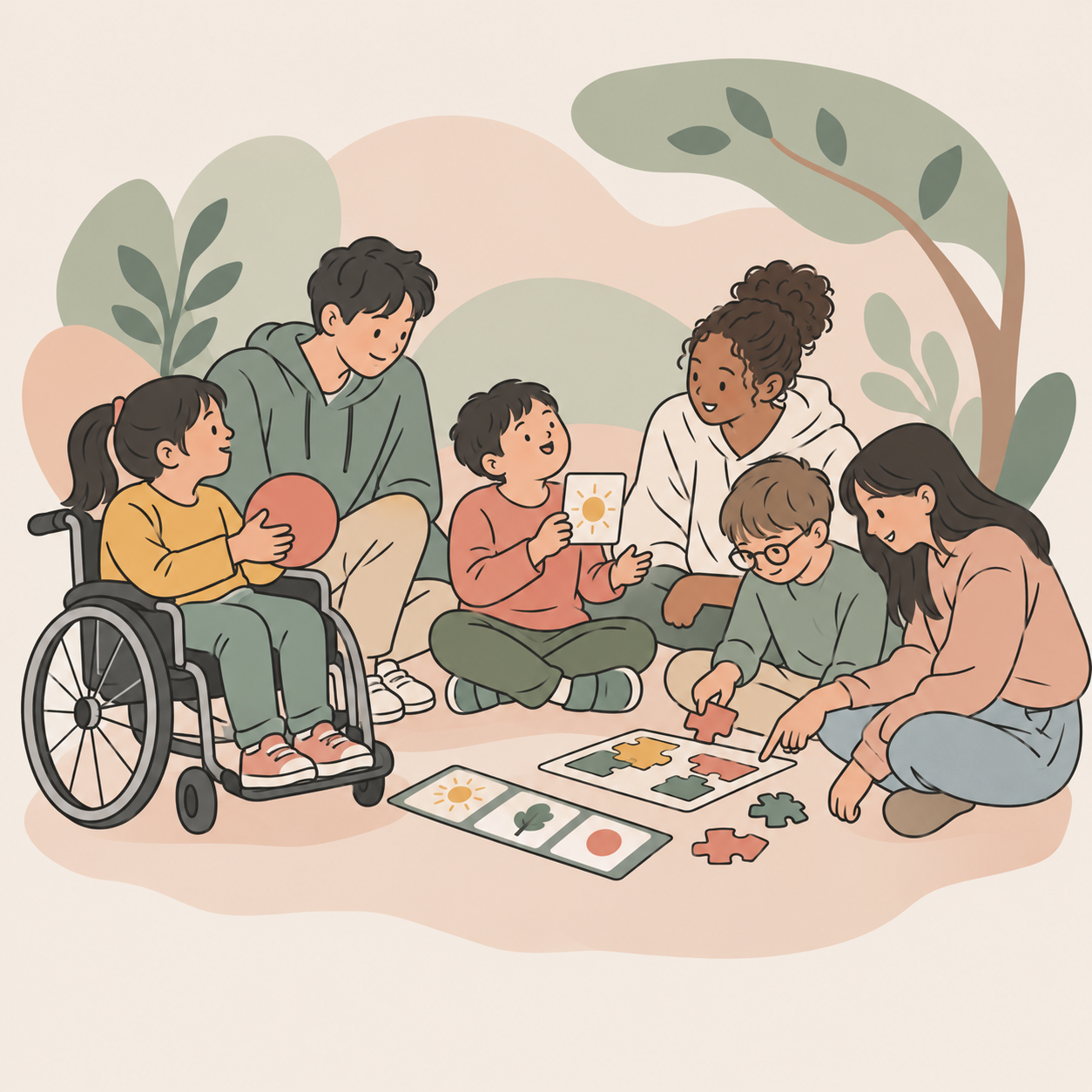
Physical activities should be adapted so that every child has an opportunity to participate successfully.
This week, we explored ways to modify equipment, distance, and physical support based on individual motor abilities.
We learned that small adjustments can transform frustration into confidence and enjoyment.
Nine of our ten volunteers attended this week’s session, with Maya absent. Our training focused on adapting physical play for children with different levels of gross motor coordination.
We discussed how standard games may present unnecessary barriers for some children. Instead of expecting every child to play in exactly the same way, volunteers can adjust the equipment, simplify the movements, or change the distance to the goal.
Noah, a ninth-grade volunteer, suggested using soft sensory foam balls because they are easier and safer to catch. Alex, a 12th-grade volunteer, demonstrated hand-over-hand assistance during a bowling activity, showing how physical guidance can be offered carefully and respectfully.
Every child can experience success when the activity adapts to the child.
During our role-play, a buddy repeatedly dropped the ball and began to lose confidence. Ethan and Ella moved the target bucket three feet closer and replaced the ball with a beanbag that was easier to hold. The change allowed the buddy to experience immediate success and remain engaged in the activity.
We learned that adapting a game does not reduce its value. Thoughtful modifications give children a meaningful opportunity to participate, build skills, and enjoy playing alongside others.