

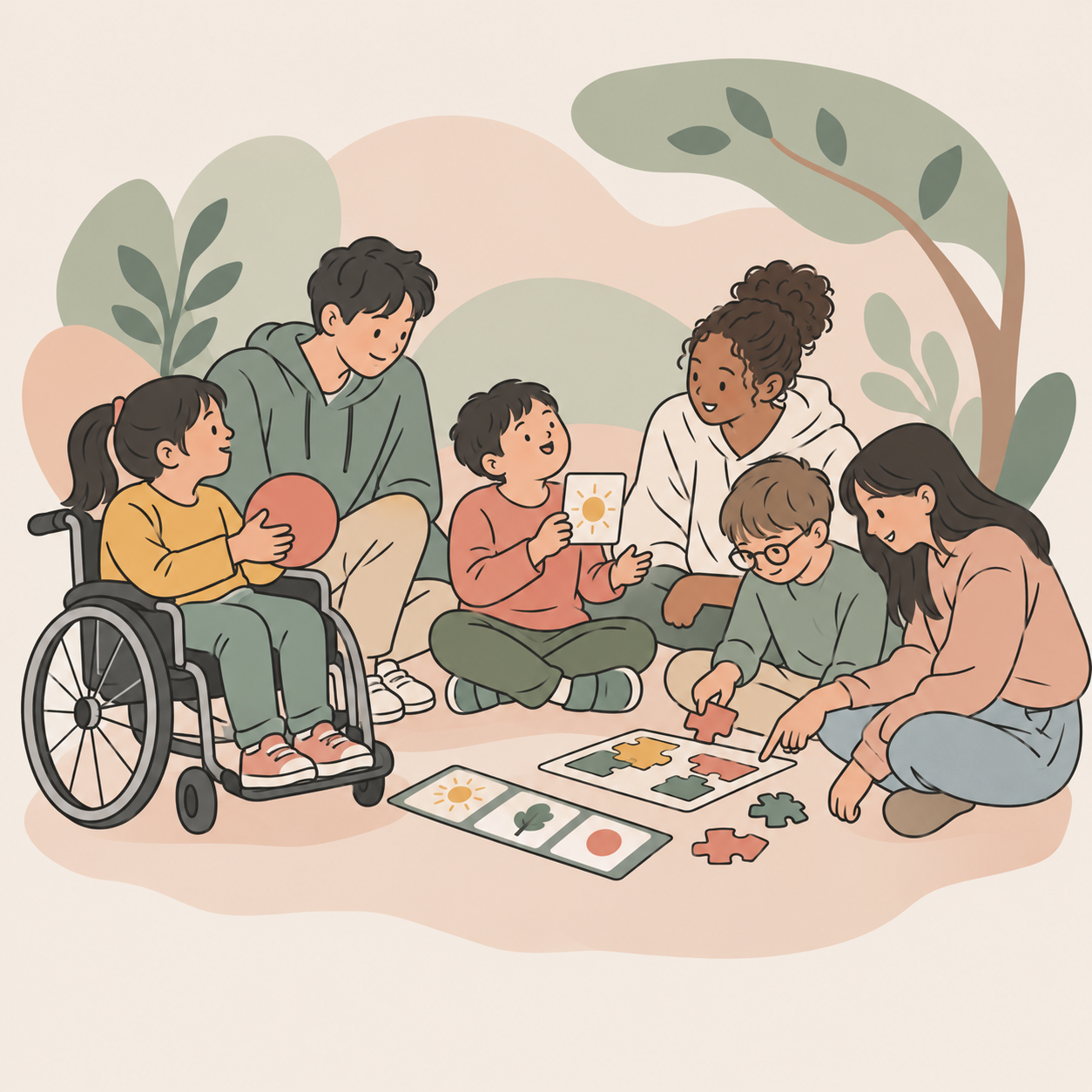
Sounds, lights, textures, and movement can affect each child differently.
This week, we learned to distinguish sensory overload from sensory-seeking behavior. We also explored how thoughtful environmental changes can help a buddy regain comfort and emotional balance.
“Sometimes the environment must become quieter before a child can feel heard.”
Nine of our ten volunteers attended the third session, with Noah absent. Our topic was sensory processing and the ways environmental triggers can influence behavior, comfort, and participation.
We discussed the difference between sensory overload and sensory seeking. A child experiencing overload may cover their ears, avoid bright spaces, cry, or attempt to leave. A sensory-seeking child may look for additional movement, pressure, sound, or tactile input.
Chloe reflected on how fluorescent lights may cause discomfort for children who are sensitive to brightness or flickering. Lucas evaluated noise-canceling headphones and considered how they could help a buddy participate in a loud setting without becoming overwhelmed.
Our role-play involved a buddy who began screaming when loud music started. Rather than demanding that the buddy calm down or remain in the activity, Maya reduced her verbal instructions and guided the buddy to a designated Cool-Down Zone.
The quiet space provided distance from the trigger and gave the buddy time to regulate. This exercise taught us to view sensory reactions as meaningful information rather than misbehavior.
By observing the environment and responding early, mentors can help prevent distress and make activities more welcoming for children with different sensory needs.an reduce stress while helping buddies develop safer and more effective ways to communicate their needs.