

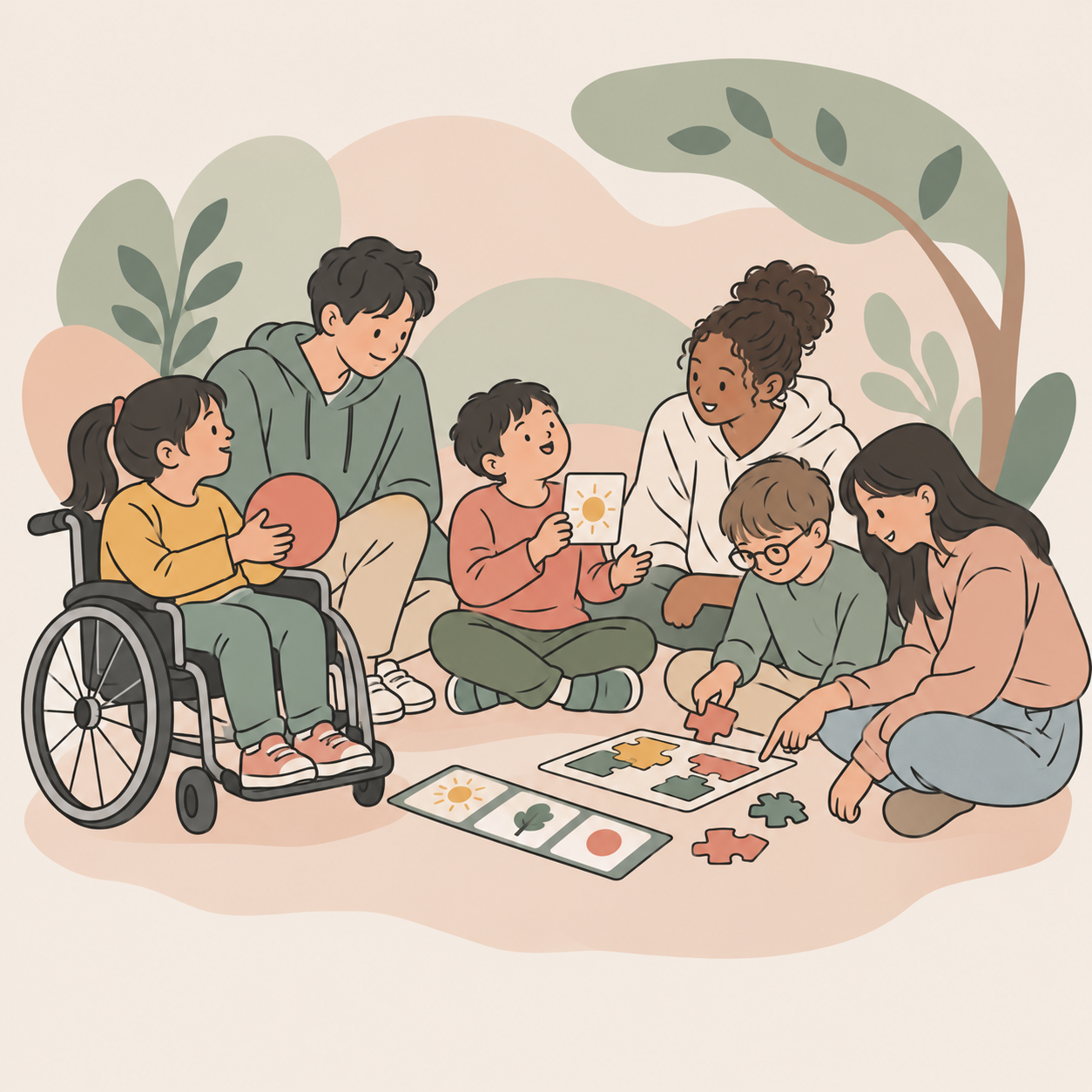
Meaningful mentorship begins by recognizing each child’s abilities, choices, and individuality.
In our first training session, we explored neurodiversity, presumed competence, and respectful one-on-one support. Through discussion and role-play, we learned that a mentor’s role is to build trust—not to take control.
“True mentorship begins when we stop asking what a child cannot do and start discovering how they choose to connect.”
All ten volunteers attended the first soop the buddy training session. We began by discussing the foundation of one-on-one mentorship and how our attitudes can shape a child’s experience.
A central theme was moving from pity to partnership. We learned that helping a child does not mean doing everything for them. Instead, effective mentorship involves listening, observing, offering appropriate support, and allowing the child to make meaningful choices.
We also explored the concept of neurodiversity and the importance of presuming competence. A child’s communication style, physical movement, or response time does not determine their intelligence or potential. Mentors should begin with the belief that every buddy can understand, participate, and contribute.
Alex, a 12th-grade volunteer, observed that doing everything for a buddy can unintentionally take away the child’s autonomy. Ella, a ninth-grade volunteer, asked how to greet a child who does not communicate verbally.
For our role-play, we practiced supporting a buddy who refused to leave a parent’s car. Maya played the parent, Lucas played the buddy, and Hannah played the mentor. Instead of pulling the buddy’s arms or repeatedly giving verbal commands, Hannah offered visual welcome cards and allowed time for the buddy to respond.
Our first session established an important principle for the entire program: support should be offered with patience, respect, and the belief that every child deserves to be treated as a capable partner.The pause initially felt long, but it gave the buddy time to process the options and respond independently. We learned that patient waiting is not passive—it is an essential part of respectful communication.communicate their needs.