

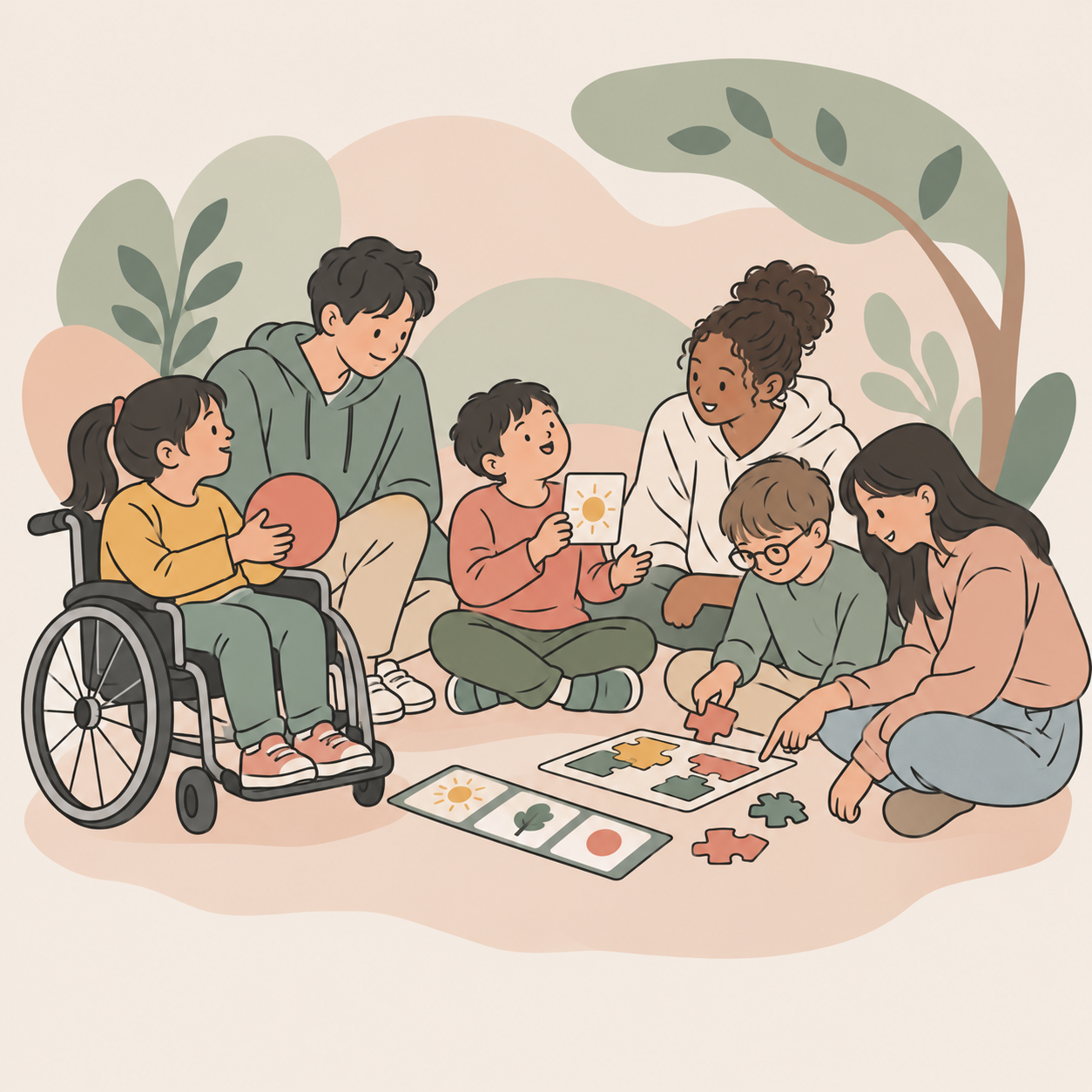
Physical assistance should always protect a child’s safety, dignity, and right to personal autonomy.
This week, we reviewed wheelchair etiquette, mobility assistance, and safe transition procedures. We learned to ask permission, explain each step, and involve trained staff whenever necessary.
“Respectful support begins by asking before helping.”
All ten volunteers attended our fifth session, which focused on supporting children with physical and orthopedic disabilities.
We discussed mobility devices as part of a person’s personal space. A wheelchair should never be pushed, leaned on, moved, or used to carry items without the user’s permission.
Daniel emphasized the importance of asking before pushing a wheelchair, even when a volunteer believes that assistance is needed. Requesting permission gives the buddy an opportunity to communicate preferences and maintain control over their movement.
Maya reviewed basic lifting safety rules. Volunteers learned that they should not attempt transfers independently unless they are specifically trained and authorized. A supervising staff member must be involved when physical assistance could create a safety risk.
For our role-play, we practiced transitioning a buddy from a wheelchair to a floor mat. Alex and Sophia explained each step verbally before taking action, asked the buddy for permission, and requested assistance from trained staff.
This session reminded us that good intentions alone are not enough. Safe and respectful support requires consent, communication, proper training, and awareness of personal boundaries. and providing the time and environment needed for regulation.