

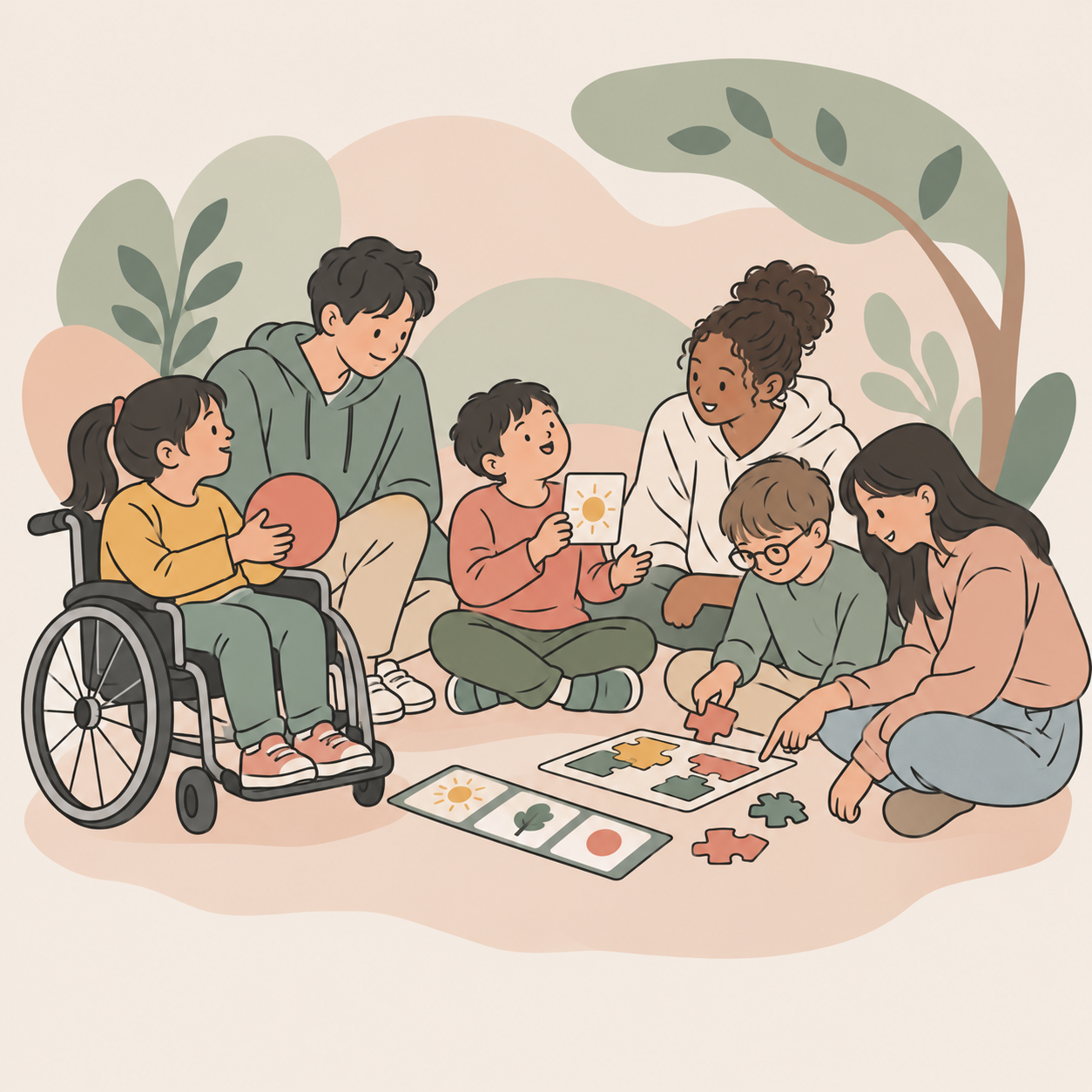
Mentors can help create social opportunities without taking over a buddy’s voice.
This week, we practiced supporting conversations, allowing response time, and encouraging shared interests.
Our goal was to build bridges between people while keeping the buddy at the center of the interaction.
“A good mentor opens the door to connection without stepping into the child’s place.”
All ten volunteers attended our sixth training session on social bridging and peer interaction.
We explored how mentors can help buddies connect with peers, visitors, and community members. Social bridging may involve introducing a shared activity, explaining a communication tool, or helping another person understand how to wait for a response.
Lucas reflected on the temptation to answer when someone directs a question to a buddy. Although answering may feel helpful, it can unintentionally exclude the buddy from their own conversation.
Ella discussed using shared sensory interests to create connections. For example, two children who enjoy textured toys, music, or movement activities may be able to interact through a shared experience before using spoken communication.
During our role-play, a guest asked the buddy’s name. Noah played the guest, and Hannah played the mentor. Instead of answering immediately, Hannah explained that the buddy used visual cards and gave the buddy enough time to select the appropriate response.
We learned that pauses do not need to be filled by the mentor. By allowing time and supporting accessible communication, we give buddies a genuine opportunity to speak for themselves.bout reducing demands, protecting everyone’s safety, and providing the time and environment needed for regulation.