

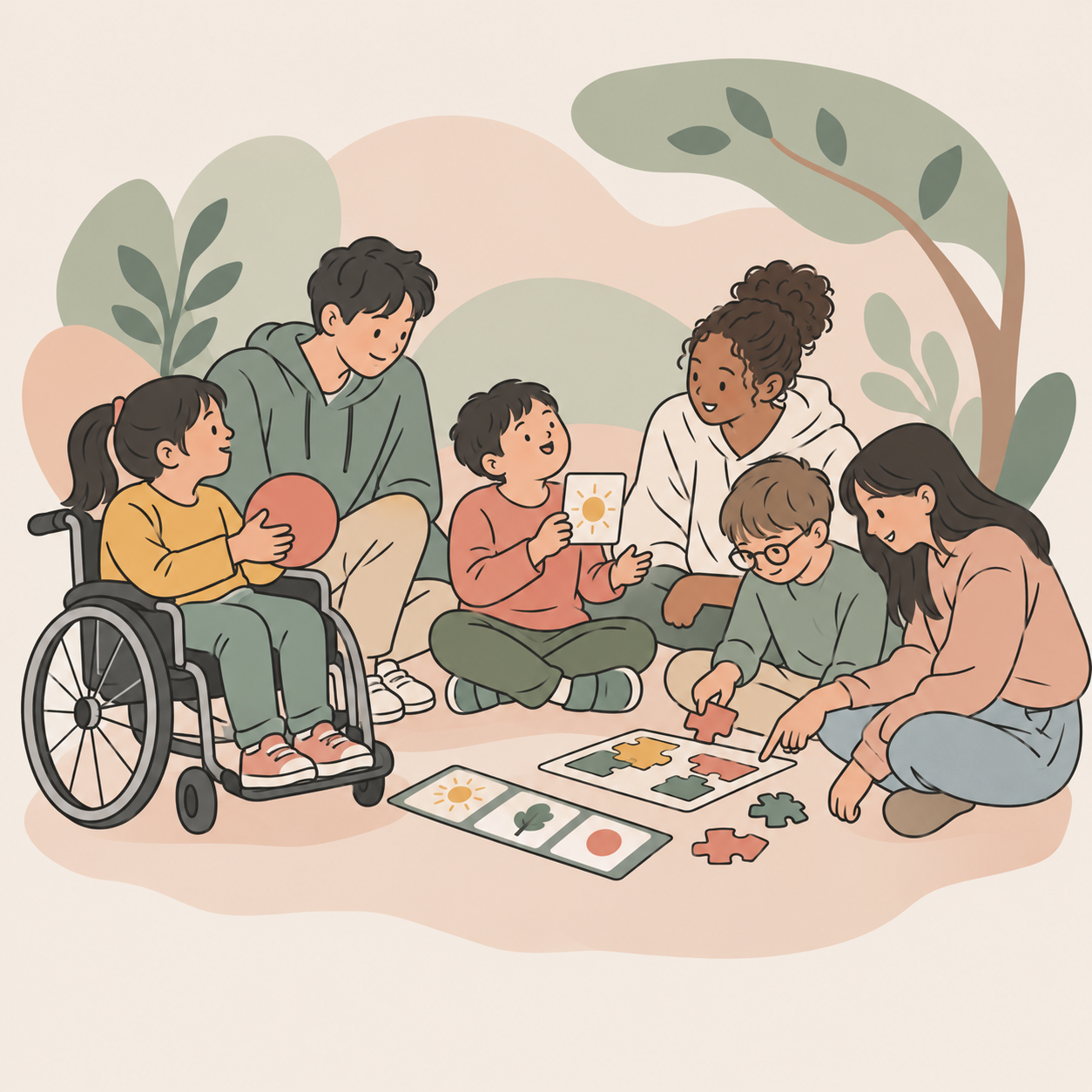
Predictable routines can help children feel safe and prepared.
This week, we learned how visual schedules, First-Then boards, and transition cues can reduce anxiety. Through role-play, we practiced responding calmly when an unexpected change disrupted a planned activity.
All ten volunteers attended our ninth training session, which focused on structure, routines, and visual schedules. We explored how predictability can support children who may feel overwhelmed when activities change unexpectedly.
One of the tools we discussed was a First-Then board. This simple visual tool shows a child what needs to happen first and what preferred activity will follow. Daniel, an 11th-grade volunteer, designed a prototype board and demonstrated how it could make instructions more understandable and manageable.
Chloe, a 12th-grade volunteer, pointed out that even something as ordinary as a change in weather can cause significant anxiety. A child may have prepared for outdoor play and struggle when rain suddenly changes the plan.
Predictability creates comfort, and clear transitions make room for confidence.
To practice this situation, Lucas and Hannah participated in a role-play in which outdoor play was canceled because of rain. Before frustration escalated, they placed a red “Change Card” on the visual schedule, calmly explained the new plan, and redirected the child to an indoor activity.
This exercise reminded us that structure does not mean that plans can never change. Instead, it means communicating changes clearly and giving children enough time and support to adjust.