
Blending sounds into a word is a major step in early literacy.
This week, children explored P, Q, and R and practiced short CVC words such as “cat” and “bat.” We emphasized that mistakes are part of learning and should never become a source of shame.
“A mistake is not proof that a child cannot learn; it is evidence that the child is trying.”
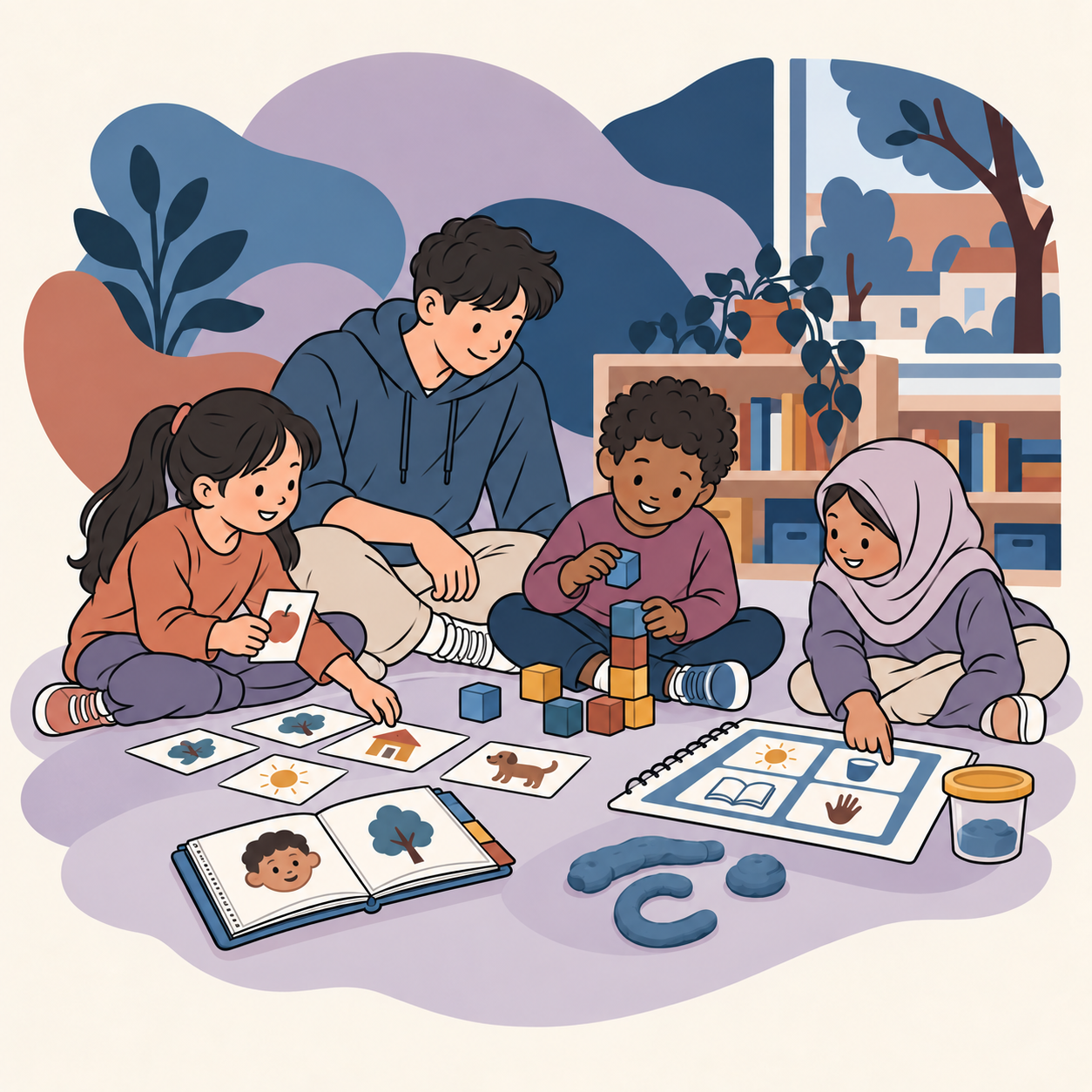
We modeled how separate sounds can be blended into one word. Children could move letter cards closer together as they slowly pronounced each sound and then heard the complete word.
In mathematics, we combined and separated sets of blocks. These actions prepared children to understand addition and subtraction as changes in quantity rather than isolated symbols.
Some learners became quiet or withdrew when unsure of an answer. Instead of correcting them immediately, we used phrases such as “Let’s try it together” and “You noticed the first sound.” This recognized effort while providing a next step.
Our goal was not fast or perfect reading. It was helping children remain engaged long enough to experiment, make an error, receive support, and try again.
- Location: City Hope Community, Clarkston, Georgia
- Learners: Refugee children in Grades 1–5 facing trauma, language barriers, and limited prior literacy or numeracy instruction
- Schedule: Once a week, 2.5–3 hours per session
- Learning framework: Safety and grounding → non-verbal and sensory communication → scaffolded literacy and mathematics