

Language becomes meaningful when children can use it to share something about themselves.
This week, learners completed sentence frames such as “I like blue” or “I like cats.” Stories, patterns, and sorting activities supported both self-expression and emotional relaxation.
“A child’s first sentences should not only describe the world; they should make room for the child within it.”
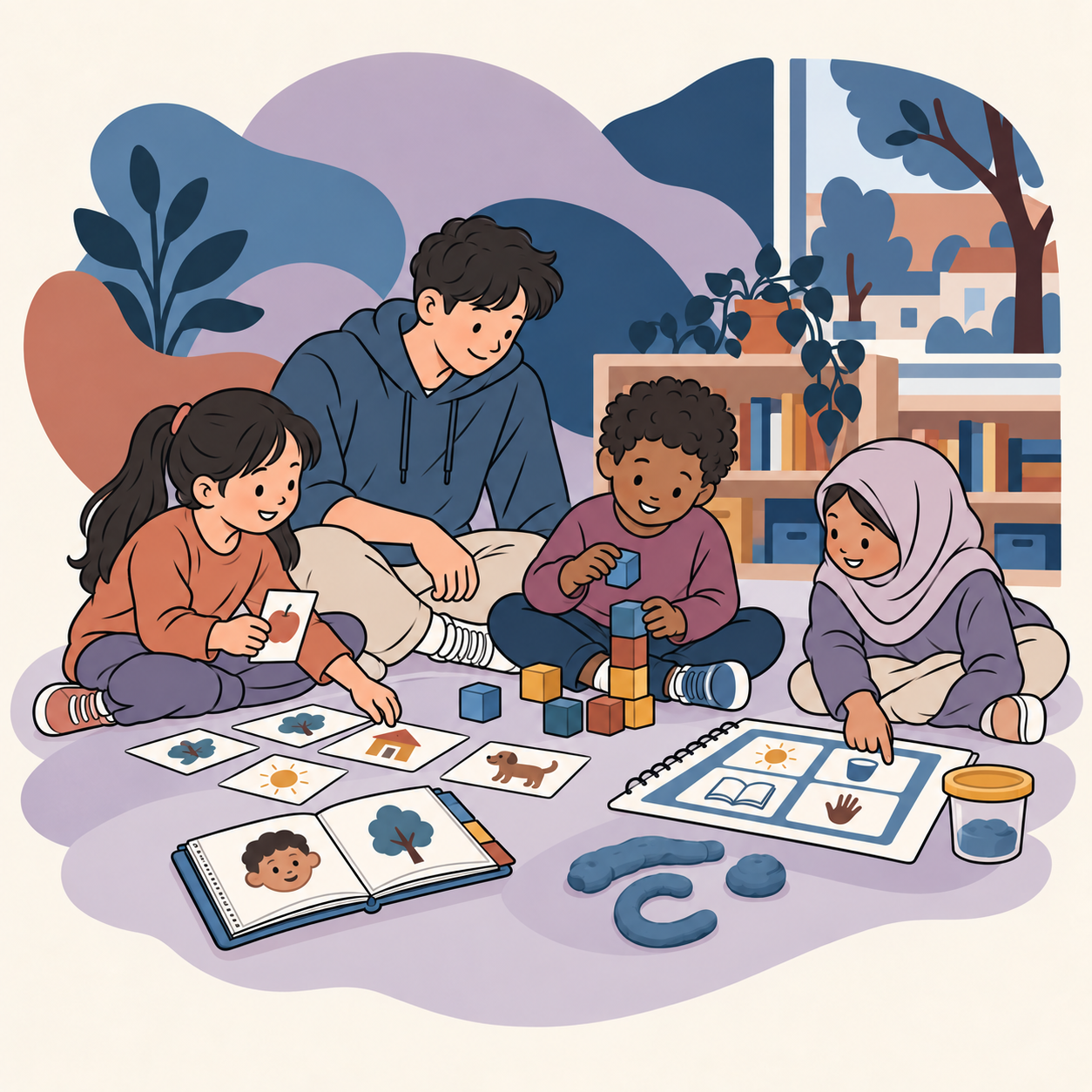
We provided picture choices for colors, animals, foods, and activities. Children selected a preference and completed the sentence frame “I like ___.” They could speak, point, trace, copy, or arrange word cards.
In mathematics, learners identified repeating patterns and sorted objects by color, shape, or size. These activities strengthened observation and logical organization without relying heavily on English proficiency.
We ended with a picture book read aloud at a calm pace. Children could listen, look through the illustrations, or quietly handle a related object. The story created a shared experience without demanding performance.
This week transformed literacy from a school exercise into a tool for identity and choice.Each successful step helped replace learned helplessness with a growing sense of agency.
- Location: City Hope Community, Clarkston, Georgia
- Learners: Refugee children in Grades 1–5 facing trauma, language barriers, and limited prior literacy or numeracy instruction
- Schedule: Once a week, 2.5–3 hours per session
- Learning framework: Safety and grounding → non-verbal and sensory communication → scaffolded literacy and mathematics