
- Organization: City Hope Community, Clarkston, Georgia
- Student: Qais, an eight-year-old Afghan refugee
- Starting point: No prior English literacy, limited verbal communication, heightened alertness, and significant distress around sudden loud sounds
Week 1: The Wall of Silence
My first meeting with Qais taught me that instruction cannot begin before trust.
When an alphabet workbook caused visible distress, I put it away and changed my approach. Quiet presence became our first lesson together.
“Sometimes the first act of teaching is choosing not to teach yet.”
On my first day at City Hope, Qais remained behind his father and avoided eye contact. I opened an alphabet workbook, believing it would give our session a clear beginning, but his expression immediately changed. The material that looked ordinary to me felt like pressure to him.
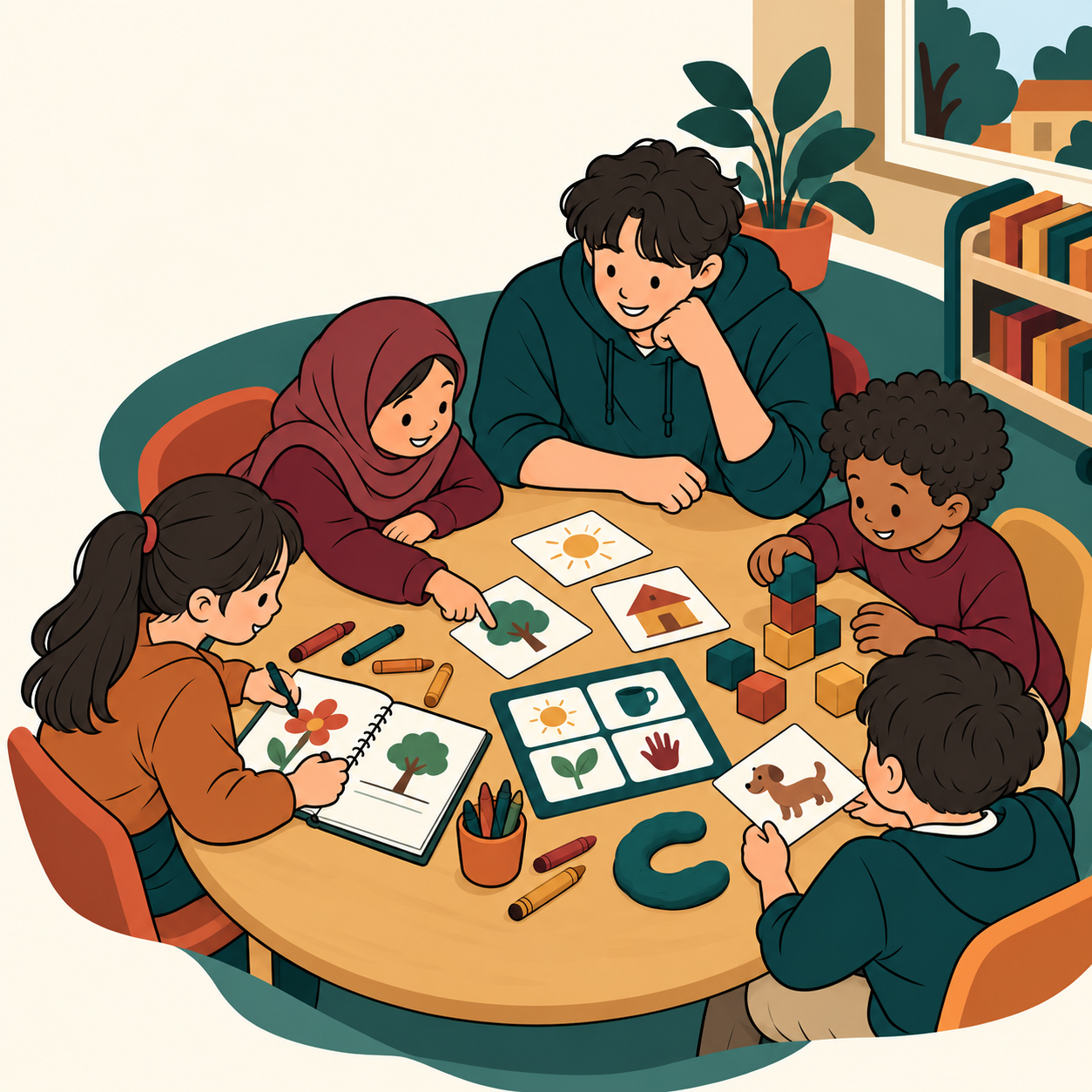
I closed the book, sat on the floor at a comfortable distance, and stopped asking questions. I kept a few blocks nearby and allowed the room to become quiet. Nearly an hour later, Qais came forward and sat across from me.
We made a brief attempt to write his name and counted three blocks together. The academic work was small, but the decision to approach was his.
That day changed my understanding of readiness. My plan mattered less than whether Qais experienced the space—and me—as safe.