

Qais did not need to speak before he could begin communicating with me.
This week, visual symbols replaced the pressure of repeated verbal questions. His first purposeful choice gave us a shared language and a new starting point.
“Communication begins when another person recognizes the meaning in your choice.”
I introduced flashcards for A, B, and C, but Qais showed little interest. When I encouraged him to repeat the sounds, I noticed his body becoming tense. I realized that the expectation to speak was creating another barrier.
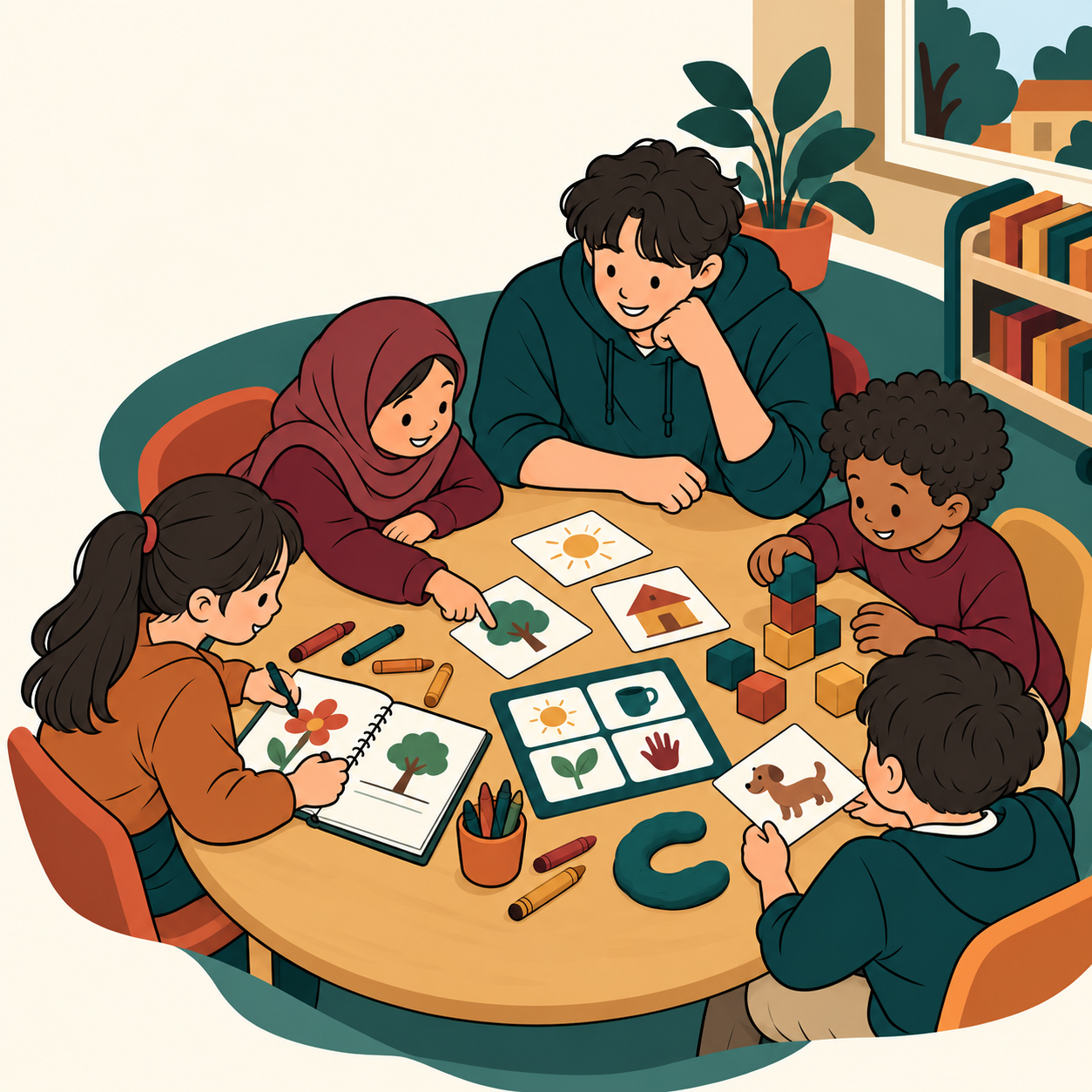
I brought out a small set of picture cards showing “bathroom,” “break,” “help,” “safe,” and “finished.” I demonstrated each card without requiring an immediate response and placed them where he could reach them.
After some time, Qais pointed to “safe.” I acknowledged the choice calmly and allowed him to keep the card beside him. That single gesture became our first clear exchange.
We still listened to a few letter sounds, but the most important learning was mine: communication was already present. I needed to provide a form in which it could be expressed.
- Organization: City Hope Community, Clarkston, Georgia
- Student: Qais, an eight-year-old Afghan refugee
- Starting point: No prior English literacy, limited verbal communication, heightened alertness, and significant distress around sudden loud sounds