

A single handwritten letter became an important sign of growing trust.
This week, Qais traced the first letter of his name and counted from one to five using his fingers. For the first time, our tutoring routine seemed to feel familiar rather than threatening.
“The first letter he wrote was more than a mark on paper; it was a sign that he was ready to enter the learning process.”
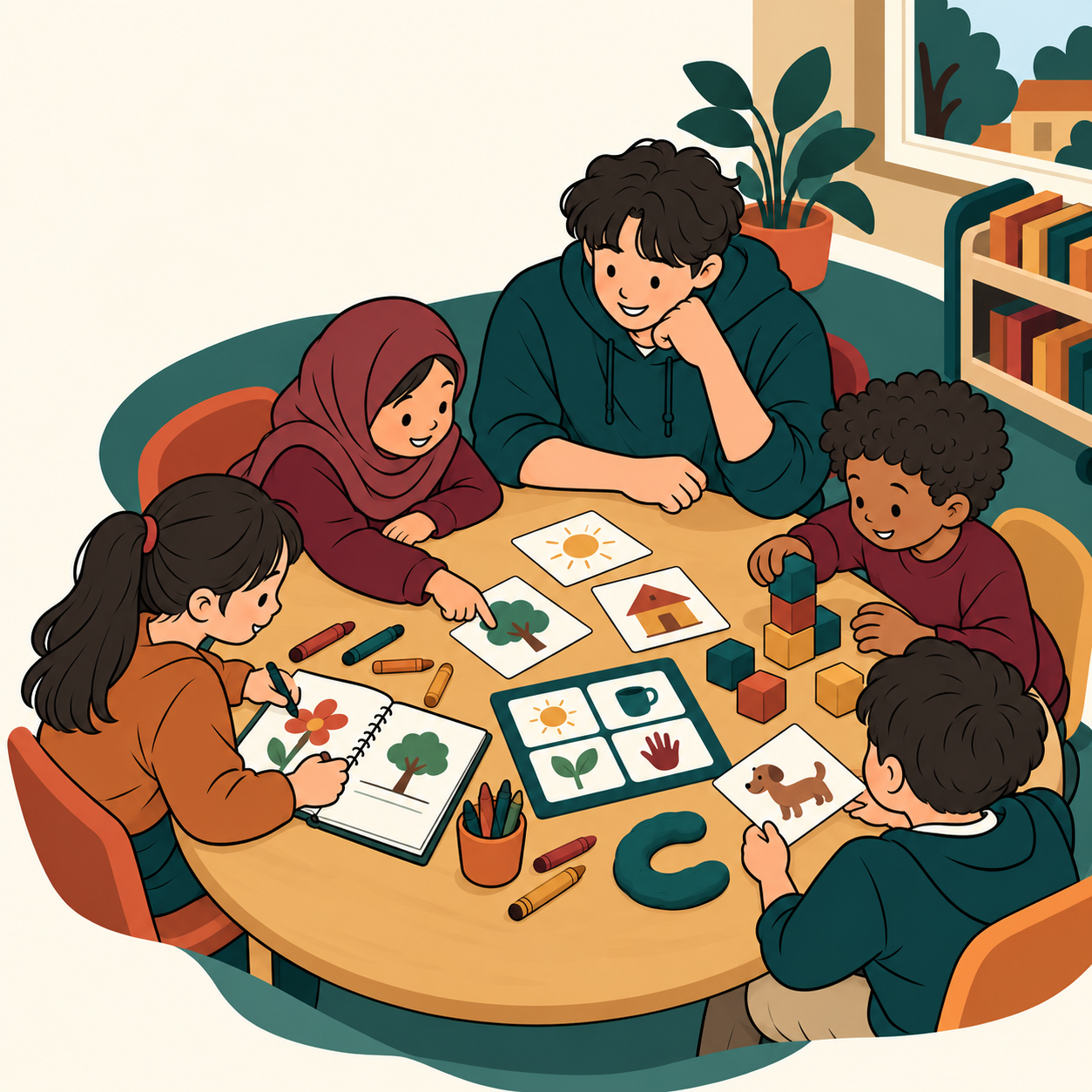
I gave Qais a blank notebook that he could keep. Rather than opening a workbook, I wrote a large Q on the first page and traced it slowly with my finger.
Qais watched and then followed the shape with his own finger. After several attempts, he traced the letter himself. A faint smile appeared, the first I had seen during our sessions.
We then counted from one to five using our fingers. The activity connected movement, speech, and quantity without requiring unfamiliar materials.
By the end of the session, Qais appeared more comfortable with our routine. He knew where we would sit, how we would begin, and that I would not force him to respond. The notebook became a personal object that belonged to him—and the letter Q became our first visible academic milestone.The session reminded me that a curriculum should respond to a learner’s immediate environment. For Qais, practical vocabulary could reduce confusion and make school feel more navigable.
- Organization: City Hope Community, Clarkston, Georgia
- Student: Qais, an eight-year-old Afghan refugee
- Starting point: No prior English literacy, limited verbal communication, heightened alertness, and significant distress around sudden loud sounds