

Holding a pencil still created tension, so I looked for another way to practice letter formation.
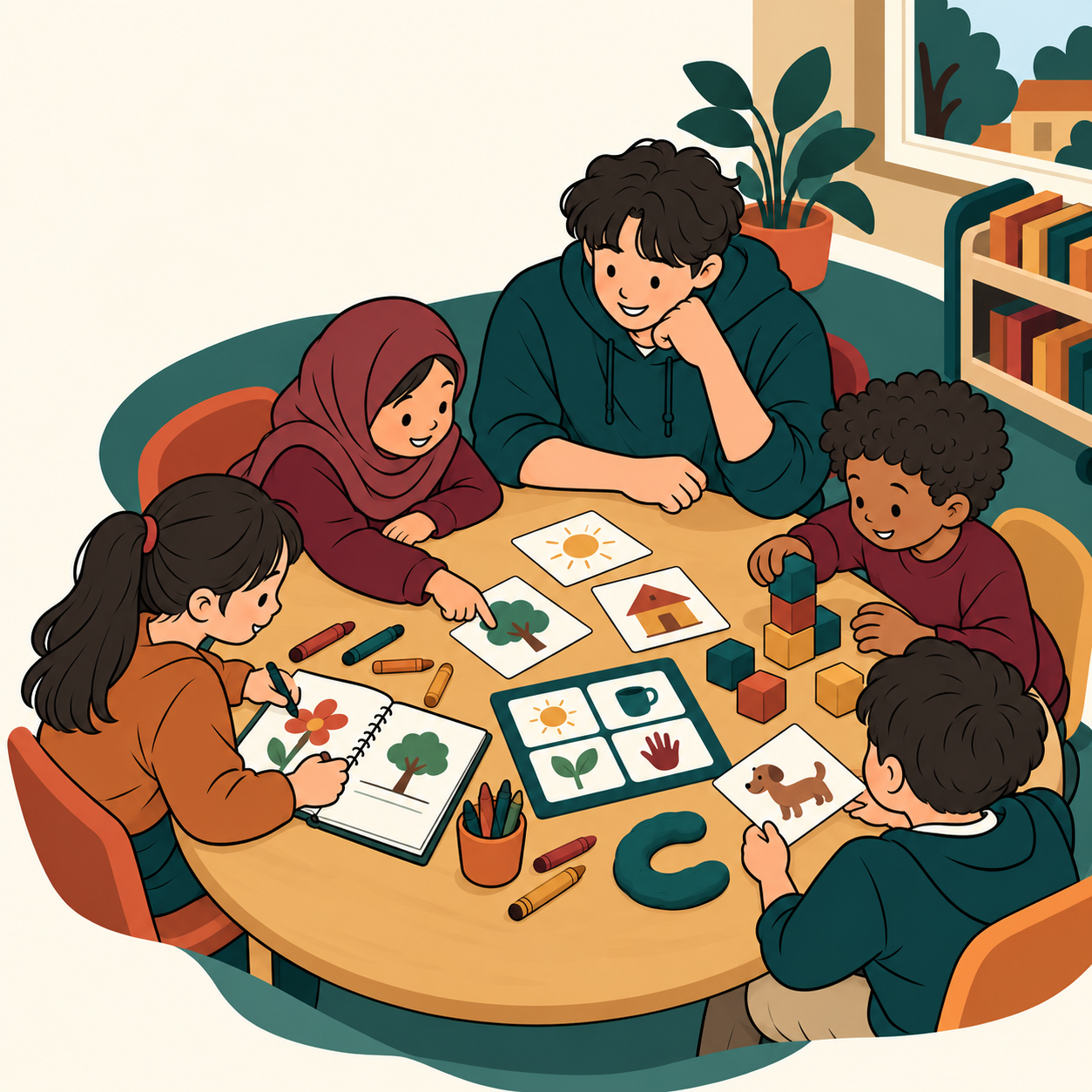
This week, we used sensory dough to shape A, B, and C while reviewing color words. The activity combined regulation, play, and phonics without turning writing into a struggle.
“When one learning tool creates a barrier, a different tool can open the same door.”
I brought soft dough and allowed Qais to explore it before introducing a task. Kneading and rolling the material appeared to help him settle into the session.
Together, we formed long and curved pieces and arranged them into A, B, and C. I modeled each letter sound while Qais changed the shapes. We also named the colors of the dough using picture cards as support.
The activity reduced the fine-motor pressure associated with a pencil and gave him control over the materials. If a letter fell apart, he could simply reshape it; there was no permanent “wrong” mark on a page.
This experience helped me understand that multisensory learning is not an extra activity. For some learners, it is the most accessible route to the same academic objective.
- Organization: City Hope Community, Clarkston, Georgia
- Student: Qais, an eight-year-old Afghan refugee
- Starting point: No prior English literacy, limited verbal communication, heightened alertness, and significant distress around sudden loud sounds