

Individual sounds and words came together as Qais began reading short sentences aloud.
This week, he combined familiar sight words and illustrated what he read. His sustained attention showed how much more comfortable he had become with academic work.
“A sentence became meaningful when he could read it, understand it, and make it his own through a picture.”
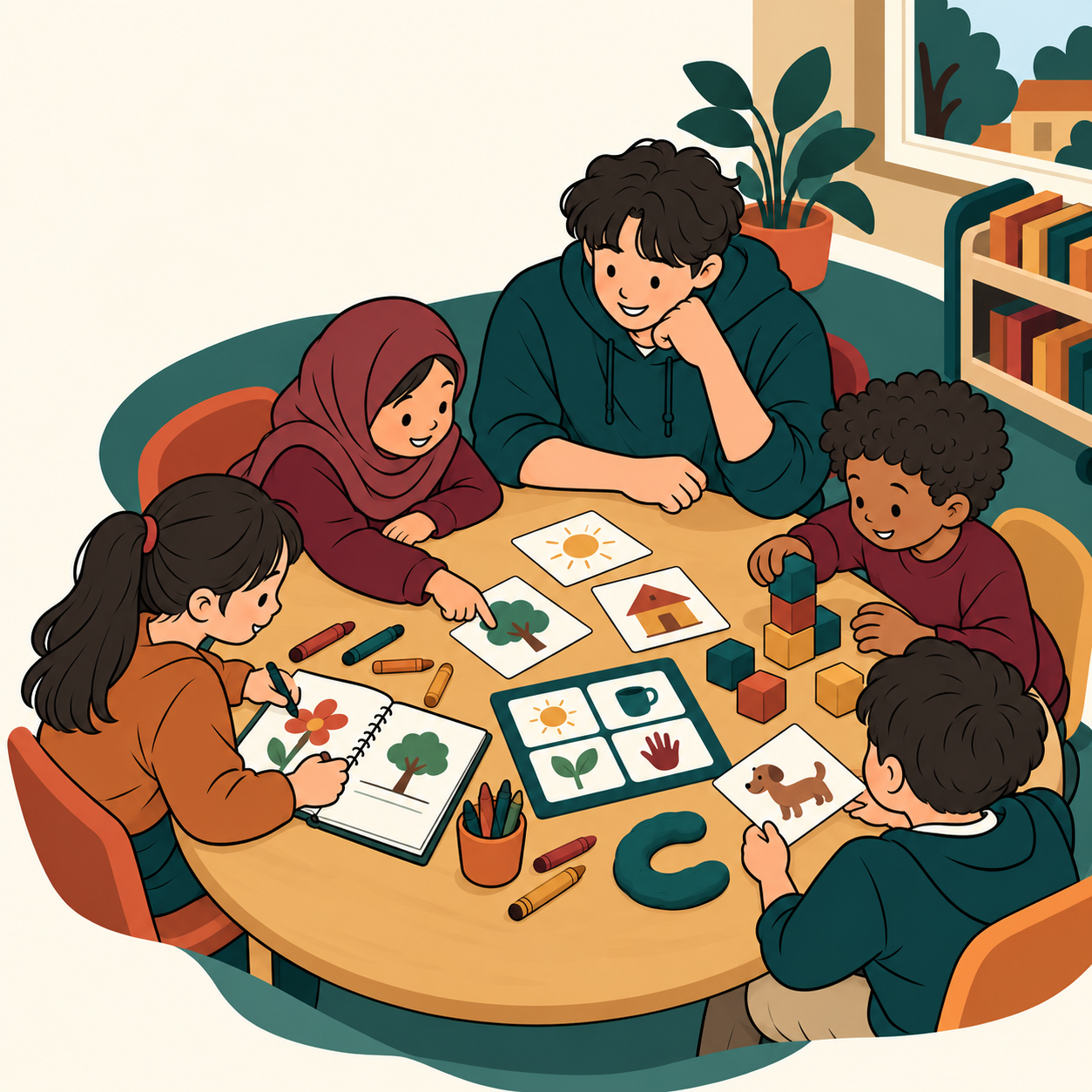
I arranged sight-word cards to form sentences such as “I see a red cat.” Qais pointed to each word, read the sentence slowly, and then repeated it with greater fluency.
After reading, he drew an illustration. The picture allowed him to show comprehension without relying on additional verbal explanation. He remained deeply focused during much of our three-hour session, taking breaks when needed.
We changed the color and object cards to create new sentences. Gradually, Qais began choosing the words himself rather than waiting for me to arrange them.
This was an important shift from decoding to authorship. He was no longer only responding to material I presented; he was beginning to shape the content of his own learning.
- Organization: City Hope Community, Clarkston, Georgia
- Student: Qais, an eight-year-old Afghan refugee
- Starting point: No prior English literacy, limited verbal communication, heightened alertness, and significant distress around sudden loud sounds