
- Location: City Hope Community, Clarkston, Georgia
- Learners: Refugee children in Grades 1–5 facing trauma, language barriers, and limited prior literacy or numeracy instruction
- Schedule: Once a week, 2.5–3 hours per session
- Learning framework: Safety and grounding → non-verbal and sensory communication → scaffolded literacy and mathematics
For privacy, names and identifying details have been changed.
Week 1: Creating Safety Before Beginning Instruction
Learning begins when a child feels safe enough to be present.
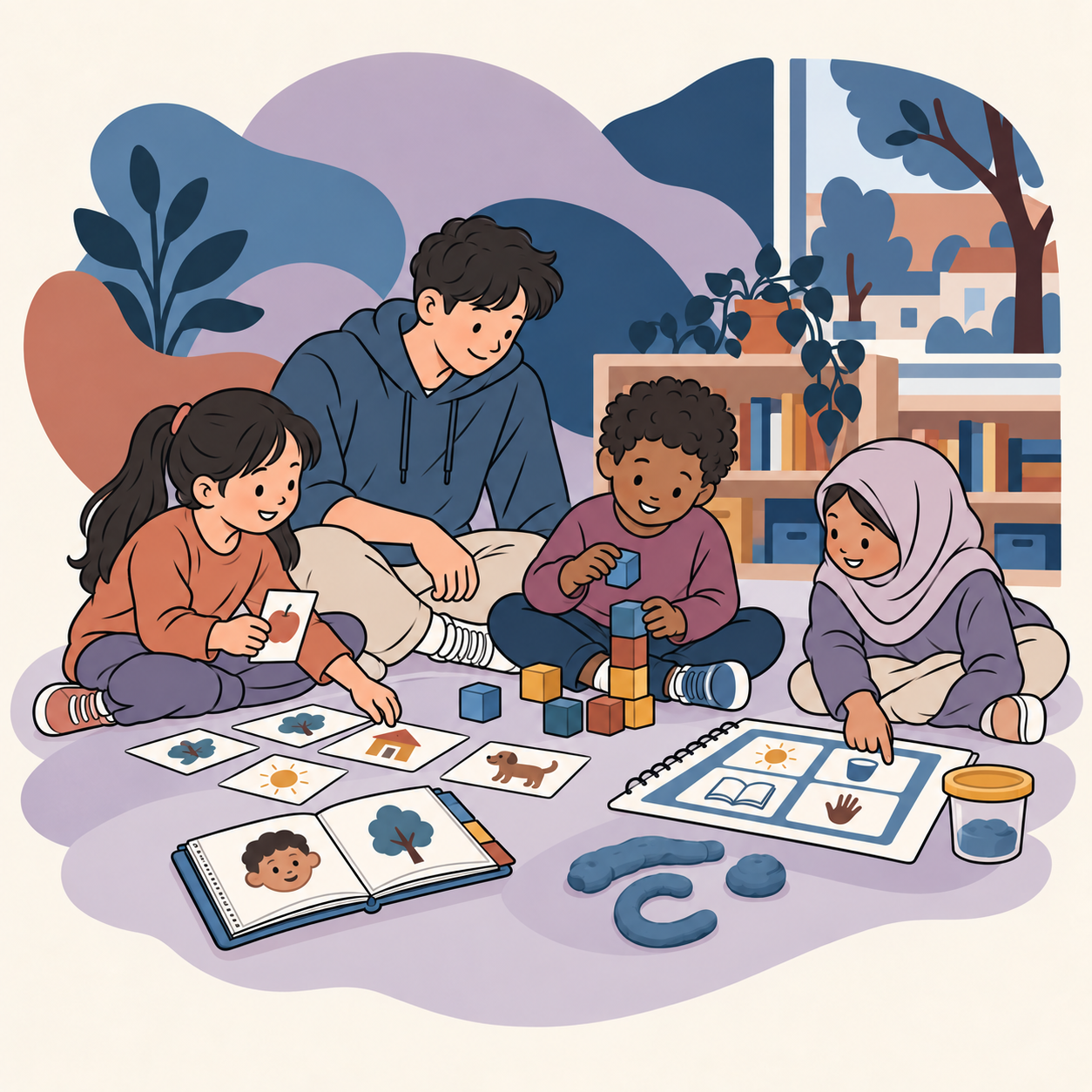
In our first session, we focused on calm introductions, name recognition, and simple counting with physical objects.
Rather than measuring success by completed worksheets, we looked for early signs of comfort, curiosity, and trust.
“Before we teach a child what to learn, we must show them that this is a safe place to learn.”
The first week established the emotional foundation for the entire program. Some children arrived unfamiliar with the room, the adults, and the expectations of a structured learning environment. We therefore kept the space quiet and avoided sudden touch, intense eye contact, or rapid questioning.
For literacy, children were invited to write or copy their names in their native languages. We then introduced a few English letter sounds without requiring verbal repetition. In mathematics, we counted one, two, and three using blocks that children could touch and move.
The activities were intentionally simple. Their purpose was not to test ability but to create a predictable first experience. By sitting at the children’s level, allowing pauses, and following their pace, we began communicating that participation would be invited rather than forced.