

Children learn more effectively when they can recognize their bodies and regulate strong emotions.
This week combined the letters D, E, and F with body-part vocabulary and number sequencing. Grounding exercises helped children return their attention to the present moment when they felt overwhelmed.
“When the body feels grounded, the mind has more space to learn.”
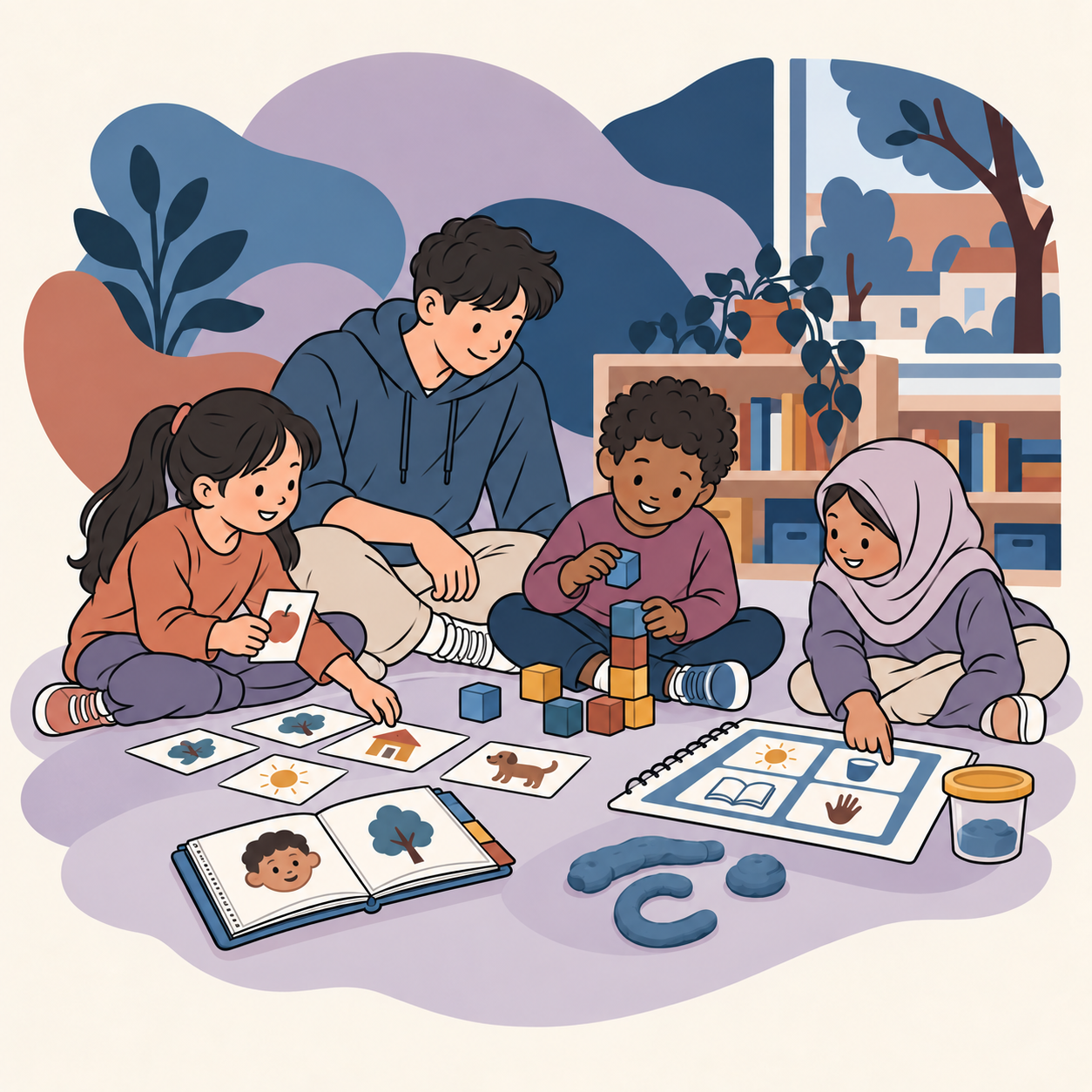
We began with simple words such as “head” and “hands,” pairing spoken language with gestures and picture cards. Children practiced the sounds of D, E, and F while pointing to images and tracing large letter shapes.
In mathematics, we arranged cards and blocks in order from one to five. Children moved the objects themselves, reinforcing sequence through both vision and touch.
Because unfamiliar environments can activate fight-or-flight responses, we practiced short grounding routines. These included placing both feet on the floor, taking a slow breath, and naming or pointing to nearby colors and objects. No child was required to close their eyes or participate physically.
The session showed that emotional regulation and academic learning are closely connected. Grounding was not a reward or punishment; it was a tool children could use to regain a sense of safety.ssible.
- Location: City Hope Community, Clarkston, Georgia
- Learners: Refugee children in Grades 1–5 facing trauma, language barriers, and limited prior literacy or numeracy instruction
- Schedule: Once a week, 2.5–3 hours per session
- Learning framework: Safety and grounding → non-verbal and sensory communication → scaffolded literacy and mathematics